
The English Channel
Meet a swimmer who crossed the English Channel and an author who wrote about the first woman ever to swim it—and saw his book made into a Hollywood film.

(Water) Logging 27 Miles
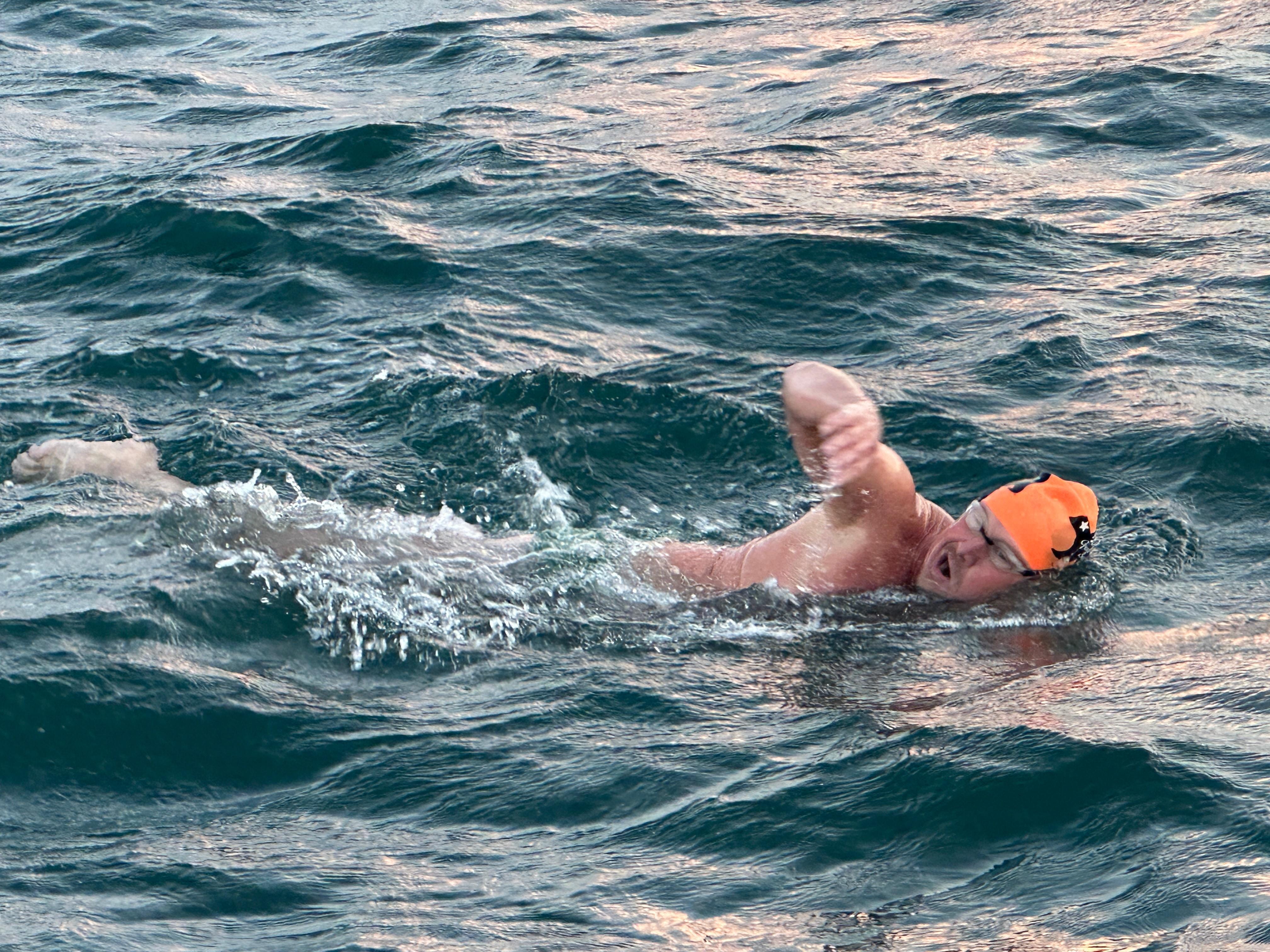
Last month, my longtime friend and groomsman Michael Heacock completed a lifelong bucket-list goal: Swimming the English Channel. “This year is the 150th anniversary of Captain Webb’s first crossing of the Channel,” he said. “To date (since 1875) about 2040 people have made the solo swim.”
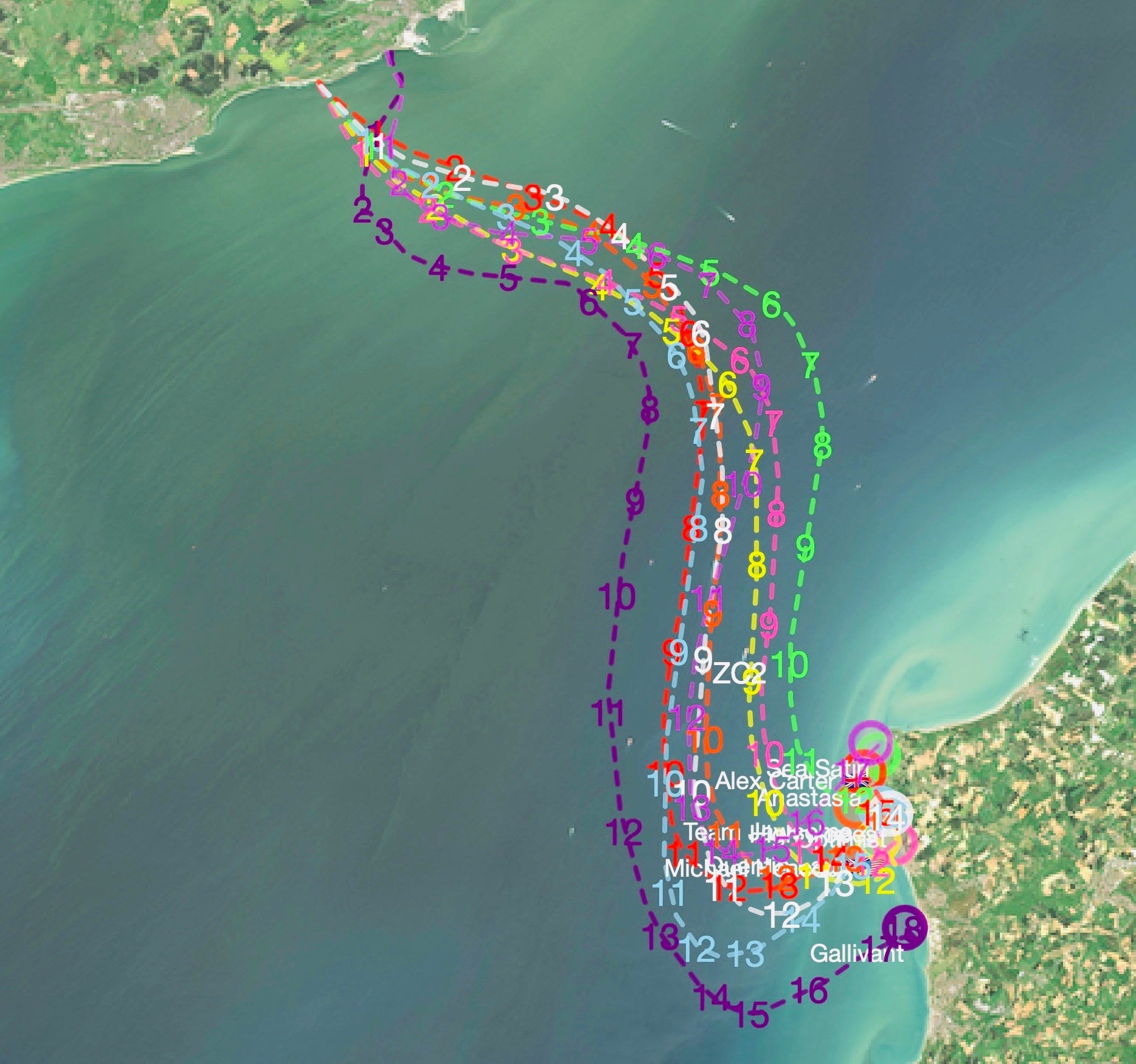
The Channel is an arm of the Atlantic Ocean between northern France and Southern England. Its narrowest stretch—the Strait of Dover—is 21 miles. However, swimmers who cross it almost always swim farther, pulled by shifting tides into a path that looks more like an S-curve. That can stretch the distance to 33 miles, or more.
Let’s put this into perspective. If you ever swam the length of a lap pool, you know what 25 yards feels like. Do that 70.4 times, and you’ve swum a mile. The shortest distance possible across the Channel—21 miles—would be 1,478 pool-lengths. (A “lap” is two pool lengths, down and back.) The daily workout of a competitive high school swimmer might range from 3,000 to 6,000 yards (1.7 to 3.4 miles), while professional athletes might clock 10,000 to 20,000 yards a day (5.7 to 11.4 miles).
But that’s in a pool. In windless air and water heated somewhere between 77 and 82 degrees. With a bottom you can see. Walls to hold onto. And lights.
Imagine starting at 2 a.m., in the inky pre-dawn waters. Temperatures typically range between 57 degrees to 64 degrees Fahrenheit. In a paper-thin layer of Lycra.
For a Channel swim to be officially recognized, you can’t use “artificial aids” for buoyancy, warmth, or speed. No wetsuits. No floatation devices. No fins or webbed gloves. Just you in a standard swimsuit—legless and sleeveless. That rules out jammers and kneeskins (think bike shorts). For men, that means swimming in a brief with no more coverage than a pair of tighty-whities.
You’re allowed one swim cap (two would be warmer—and therefore cheating!), a pair of goggles, with the option of earplugs and/or a nose clip. A support boat provides visibility and protection in one of the busiest shipping channels in the world. You can’t touch the boat or rest on a floaty. An official observer is appointed to the boat to ensure you don’t violate the rules.
“The first half of the swim was calm and fast. It felt great to glide smoothly in relatively comfortable 62-degree water,” Mike said. “About halfway the wind and swell picked up in a big way; about 15 knots with gusts and a two- to three-foot swell.”
If you’re wondering what 62-degree water feels like, it would probably take your breath away. When I’m surfing on the Boise River, which is around 65 degrees in the summer, I’m generally wearing a 5-mm wetsuit. Hypothermia can occur in water temps as warm as 60 to 70 degrees. Staving it off requires constant motion.
In a pool, the water is calmed by lane-lines. In the Channel, you’re buffeted by wind and waves, currents and tides. Some swimmers even get sea-sick.
“You feel like you’re in a 6-hour boxing match, or a cosmic washing machine; constantly fighting each wave, nausea, and depleting energy,” Mike said. “It’s defeating to look up once an hour and not see the cliffs of France. Once you do see them 9 hours in, you’re afraid to look again because they don’t seem to get closer for 3 more hours.”
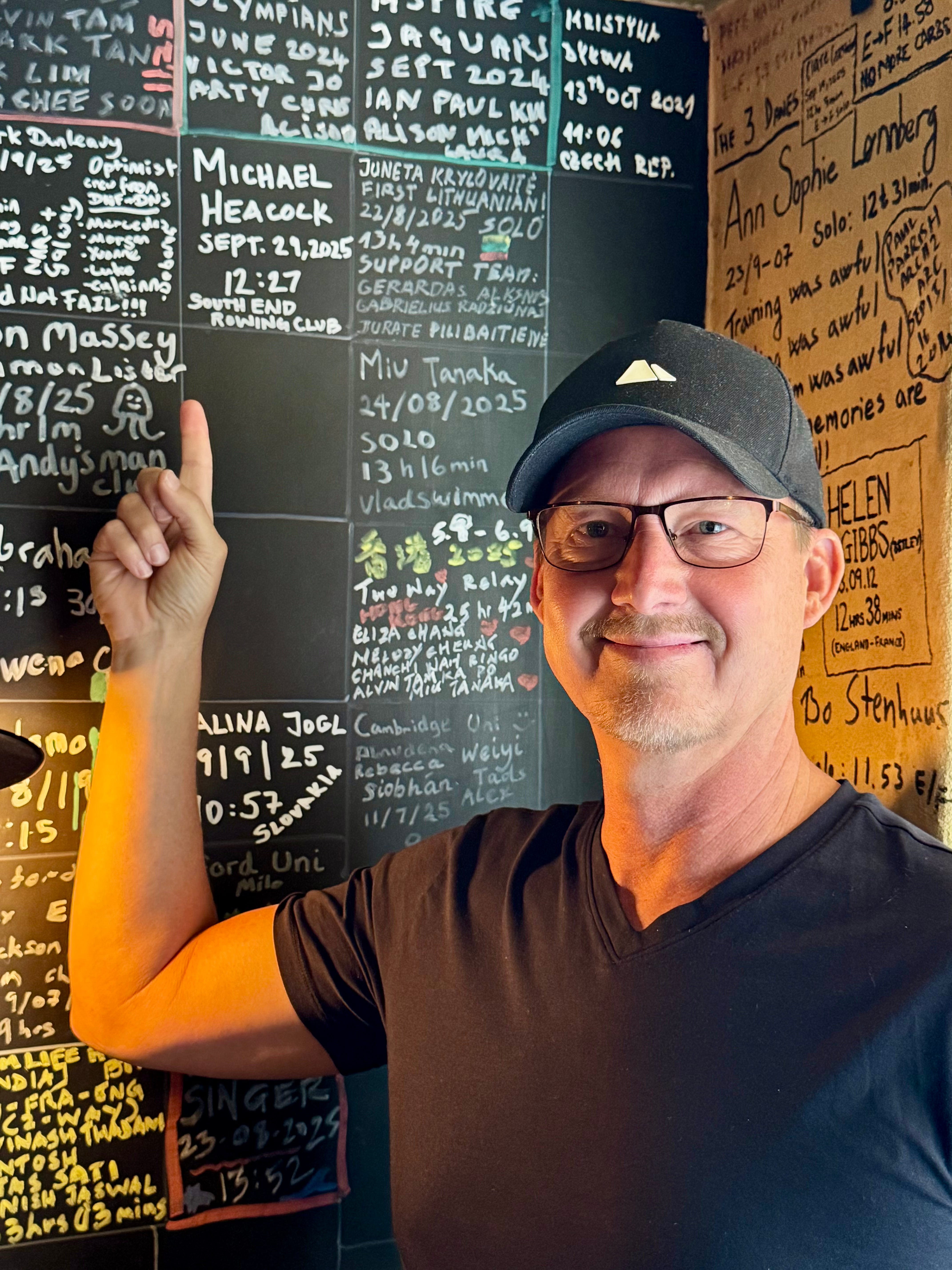
Mike logged around 27 miles and finished in 12 hours and 27 minutes. Afterward, he signed the wall at the White Horse Pub in Dover—a longstanding tradition for swimmers who successfully crossed the Channel.
Last year Mike completed the Catalina Channel Swim, a 21-mile passage between Catalina Island and Palos Verdes in Los Angeles. “Next year I’ll complete the ‘Triple Crown’ of swimming with a circumnavigation of Manhattan,” Mike says.
A Marin County architect and father of two teens, he trained with 8-hour open-water swims in the frigid San Fransisco Bay. I asked him to share the (mostly waterproof) gear that got him through the swim—and the 459 miles of swimming (!!!) he endured over the past year of training.
Mike’s Favorite Waterproof Gear
Hard Core Sport Catalina Channel Swimming Federation towel “Luxurious".”
Keen Men’s Kona Leather Flip Flops “Seriously. The best ever from a guy who knows.” (On sale for 25% off)
MySwimPro “This AI training app has literally changed my life… every day.”
Swimswimswim Radio “Give this playlist a listen.”
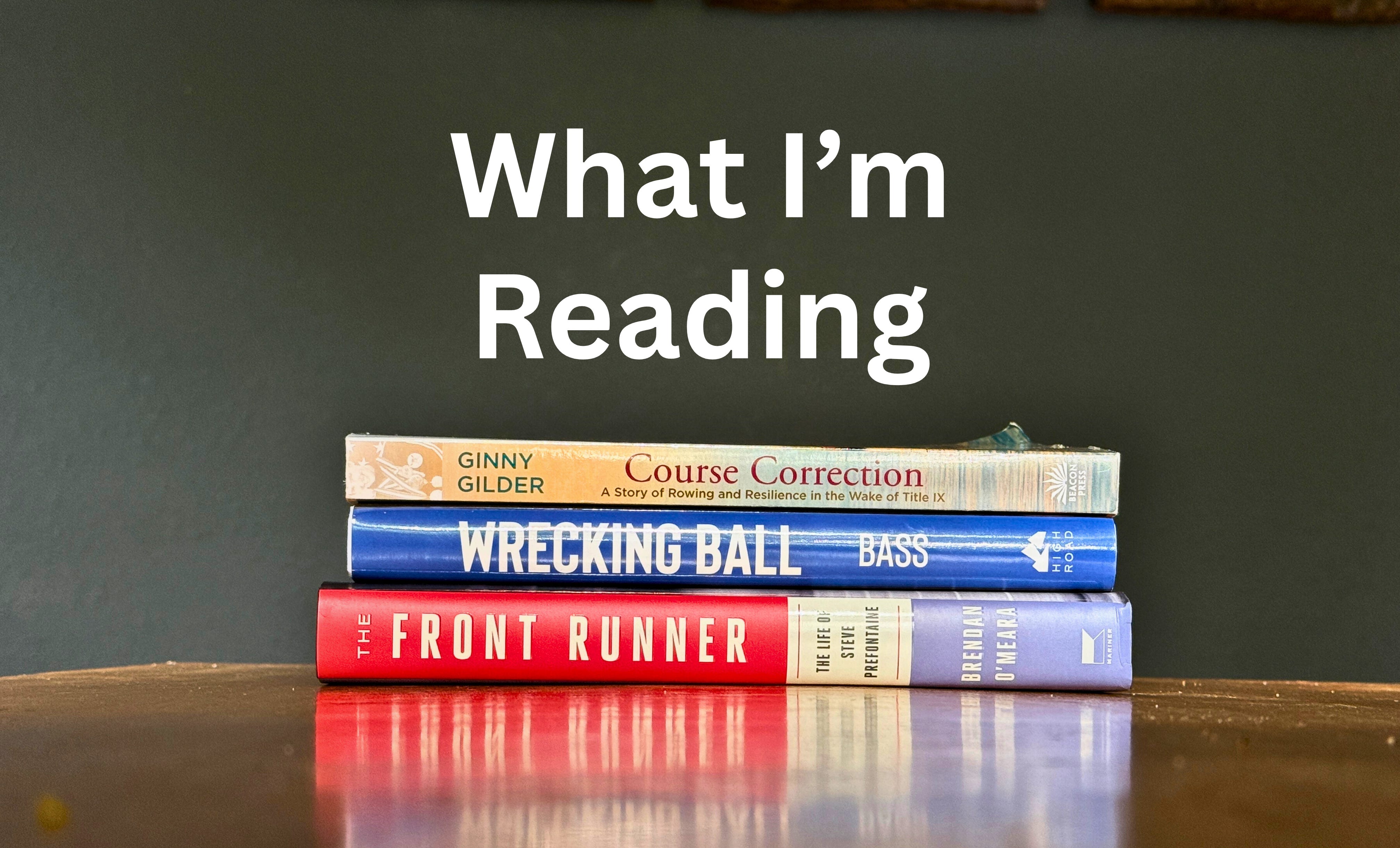
Course Correction: A Story of Rowing and Resilience in the Wake of Title IX, by Ginny Gilder
Wrecking Ball: Race, Friendship, God, and Football, by Rick Bass
The Front Runner: The Life of Steve Prefontaine, by Brendan O’Meara
What’s New
The Sawtooth Writing Retreat in September drew participants from fives states, including Alaska, North Carolina, California, Georgia, and Idaho.
Print magazines are actually having a little renaissance! I’m excited to be writing for two brand-new ones: Southlands and Geezer.
Author and CNF podcaster Brendan O’Meara interviewed me about pitching my viral wheelie story to Outside. You can read my tips in Pitch Club, his new Substack.
I’ve been named Boise City Writer-in-Residence! For my 6-month term I’ll be teaching a free public writing workshop each month from November to March.

What’s Next
October 15: Narratively Academy (free online): Join me and Lee Gutkind, “the Godfather of Creative Nonfiction” according to Vanity Fair, in a writerly chat about how to capture, find, and incorporate dialogue in narrative nonfiction.
Nov. 6-8: The Society for Features Journalism is hosting their first in-person conference since the pandemic. On Friday afternoon, I’ll lead a discussion with Mark Warren, author of this year’s Pulitzer Prize-winning feature story.
Spring 2026: Feature Writing @ Harvard. This online graduate course requires reporting and writing two longform narratives in 16 weeks. The class is small (12-16 students) and fills up fast. Registration opens on November 6.
March 28-April 4: As Food & Wine contributing editor, I’ll guest lecture about salmon aboard an 8-day Food & Wine / National Geographic cruise down the Snake and Columbia Rivers.
Kim’s Whims
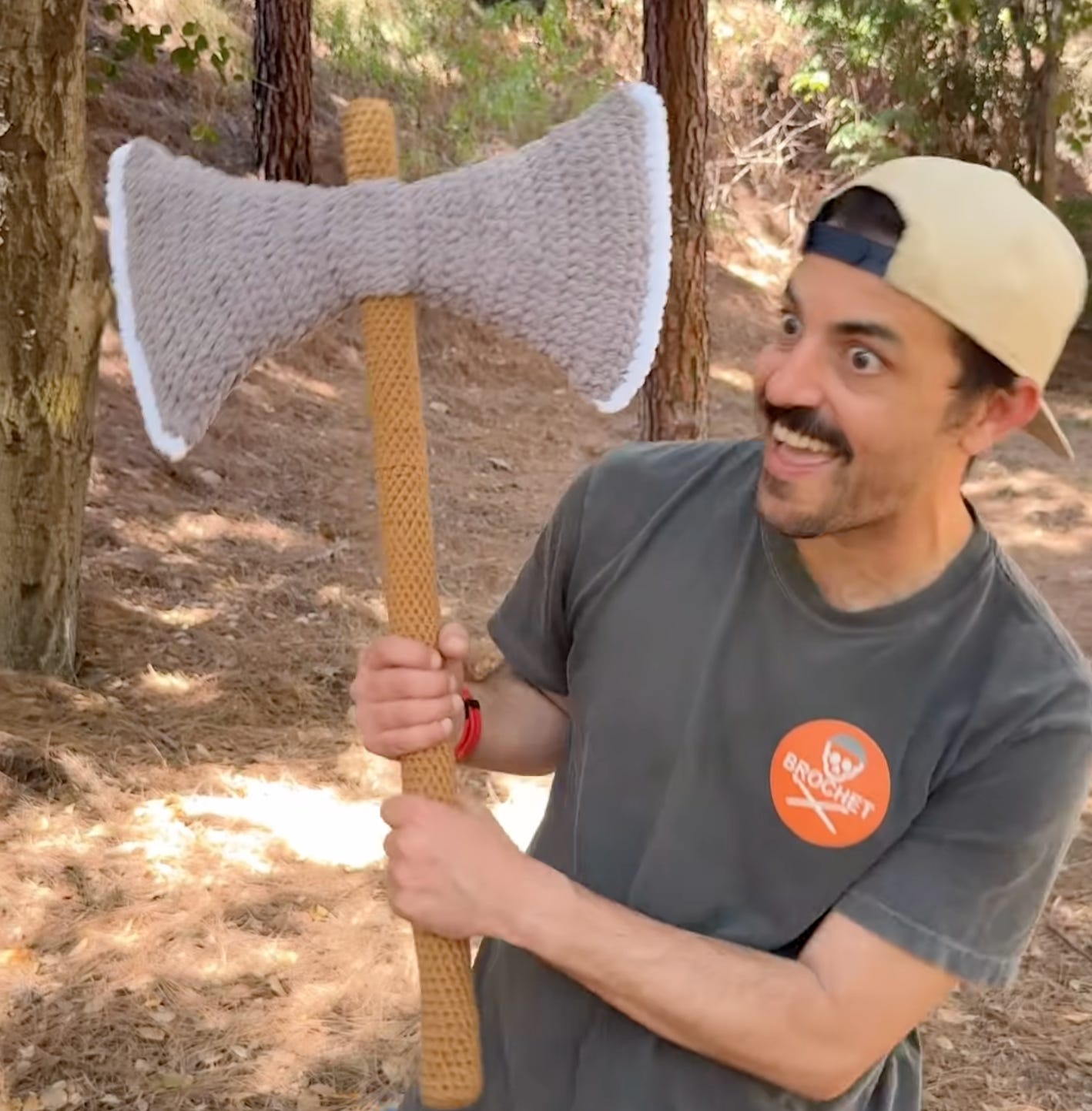
This is the place where I share some random thing that brings me joy. This month, it’s Brochet — an Instagrammer (and new book author) who crochets weapons of moderate destruction, tests them, and films the carnage yarnage.
5 Questions with: Glenn Stout
The author of Young Woman and the Sea on bringing a character to life on the page—and the silver screen.
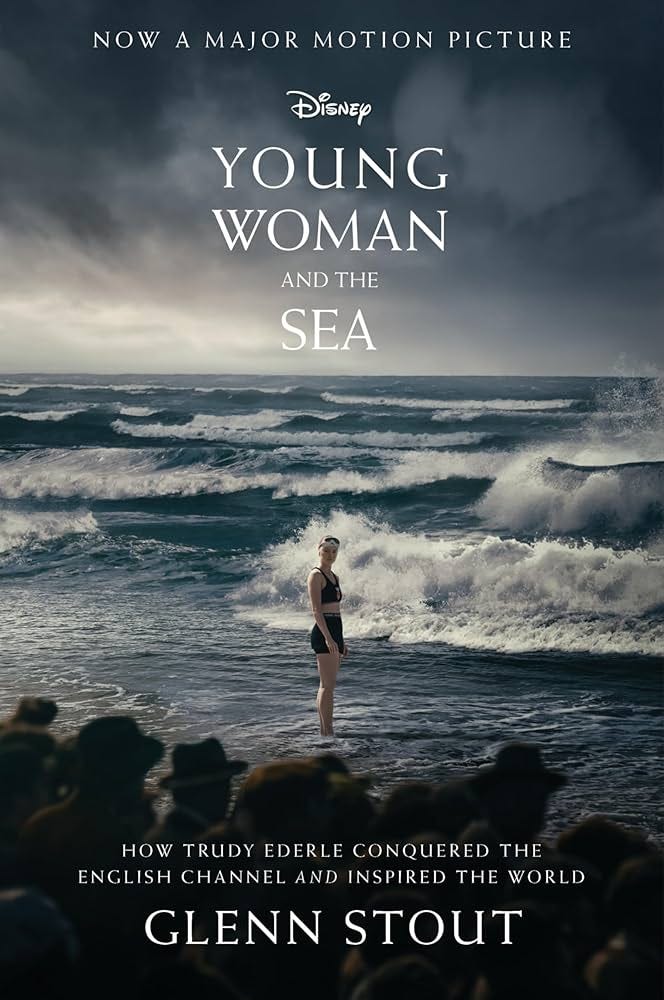
The series editor of Best American Sports Writing and author, editor, or ghostwriter of more than 100 books, Glenn Stout is one of the most prolific writers—and generous editorial mentors—I know. We met at the Mayborn Literary Nonfiction conference about 10 years ago. When his book got optioned, I was excited to see, through the eyes of a friend, how a book becomes a Hollywood movie.
First published in 2009, Young Woman and the Sea tells the story of Trudy Ederle, the first woman to swim the English Channel. Fifteen years later, in 2024, the feature film starring Daisy Ridley was released by Disney in theaters and on Disney Plus. It was a long and roller-coastery journey. I asked him to share a few insights about his research and writing process, as well as the process of adaptation and theatrical release. Here’s a heavily abridged version (paid subscribers get the unabridged deets).
How did you find this story? What gave you confidence you could turn it into a book?
When I published The Best American Sports Writing of the Century with David Halberstam in 2000, we recognized the characters and authors skewed heavily male. We envisioned a similar book that could feature overlooked female athletes, female sportswriters, or both. I began casting about for those stories in older magazines and newspapers. Meanwhile, I was poking around in microfilm newspapers to research a historical baseball book. (There were virtually no newspaper databases back then, so I scanned A LOT of microfilm.)
In the microfilm I kept encountering stories about an American teenager named “Gertrude Ederle.” She was the first woman to swim the English Channel, and I was surprised to learn that she had beaten the existing record—held by a man—BY TWO HOURS! Soon it became clear to me that A) There was enough material out there for a book; B) Her story was interesting enough to carry a book, and C) She had been almost entirely forgotten. Since swimming the Channel in1926, she had been almost completely overlooked—by sports writers, historians, women studies, everyone. I mentioned her to both my agent and an editor, and they both though it worth exploring. But it took about five years before I had time to put together a proposal.
What was your biggest reporting or writing challenge?
There were several, and they all centered around making her come alive on the page. There were no contemporaries to interview, no Ederle “experts.” Her family chose not to cooperate at the time. So how could I take this two-dimensional story, told primarily in newspaper articles (in a time before features and profiles were written), and create a three-dimensional portrait? Otherwise I’d have an encyclopedia entry.
What you end up doing as a writer is layering information from multiple sources. A single sentence in the book might be built from information and insight from a half-dozen sources. One story about an event provides one detail, a different story supplies another, then a third source even more. Suddenly you have not just what happened, but the story of what just happened.
How did you get inside the head (and goggles) of a character you couldn’t interview? Did you do any literal immersion reporting (swimming)?
Trudy died in 2003 and had been in a home for several years, so I could not talk with her. Her family chose not to share any material they had. Saying what took place and describing it is one thing, but trying to deliver an immersive scene—how it felt and was experienced by her—is another thing entirely.
I took every sensory impression she had ever mentioned—what she saw, heard, felt, and thought while swimming. I put her in the water on the first page, and allowed the reader to swim with her. Just for a couple of pages. We don’t just get the exterior accomplishment, but her interior world. The reader needed to understand that the primary pull for her was not political. She wasn’t swimming for a cause. It was personal; the water was where she felt most like herself.
Can you describe the process of a book being turned into a movie?
There is no better metaphor for the experience of seeing a book made into a film than attempting to swim the English Channel. My agent warned me that even when a book or feature is optioned, the chances are still about 1000 to 1 that it will ever get made, not to mention by a major studio. Like what takes place for so many swimmers when they try to swim the Channel, the weather is unpredictable and the tides change. You can be almost across—literally within fifty yards—and not make it to shore.
That’s what happened to the film. The first studio, Paramount, got us about two-thirds of the way there, but then some executive change led them to drop it. For 99 percent of all films, that’s it. It’s called “going into turnaround,” and you usually don’t get another chance. But like Trudy, we did. [Ednote: It’s a long story. Paid subscribers will get the whole unabridged answer...]
What’s your favorite piece of waterproof gear?
My reporting often takes place in libraries and (now) databases rather than in the field. I live in Vermont and for most of the year we might be fighting rain or snow. In the spring we have what we call “mud season,” which is when the snow melts and the ground is still frozen and every step is in a quagmire. You gotta have a good pair of boots. I wear my waterproof Oboz Sawtooth X boots almost all year around. I hate having cold, wet feet. Probably a good idea I didn’t try to swim the Channel!
The unabridged version of this Q&A is available for paid subscribers. Glenn goes into a lot more detail about his research and writing process and the complicated journey of his book becoming a feature film.
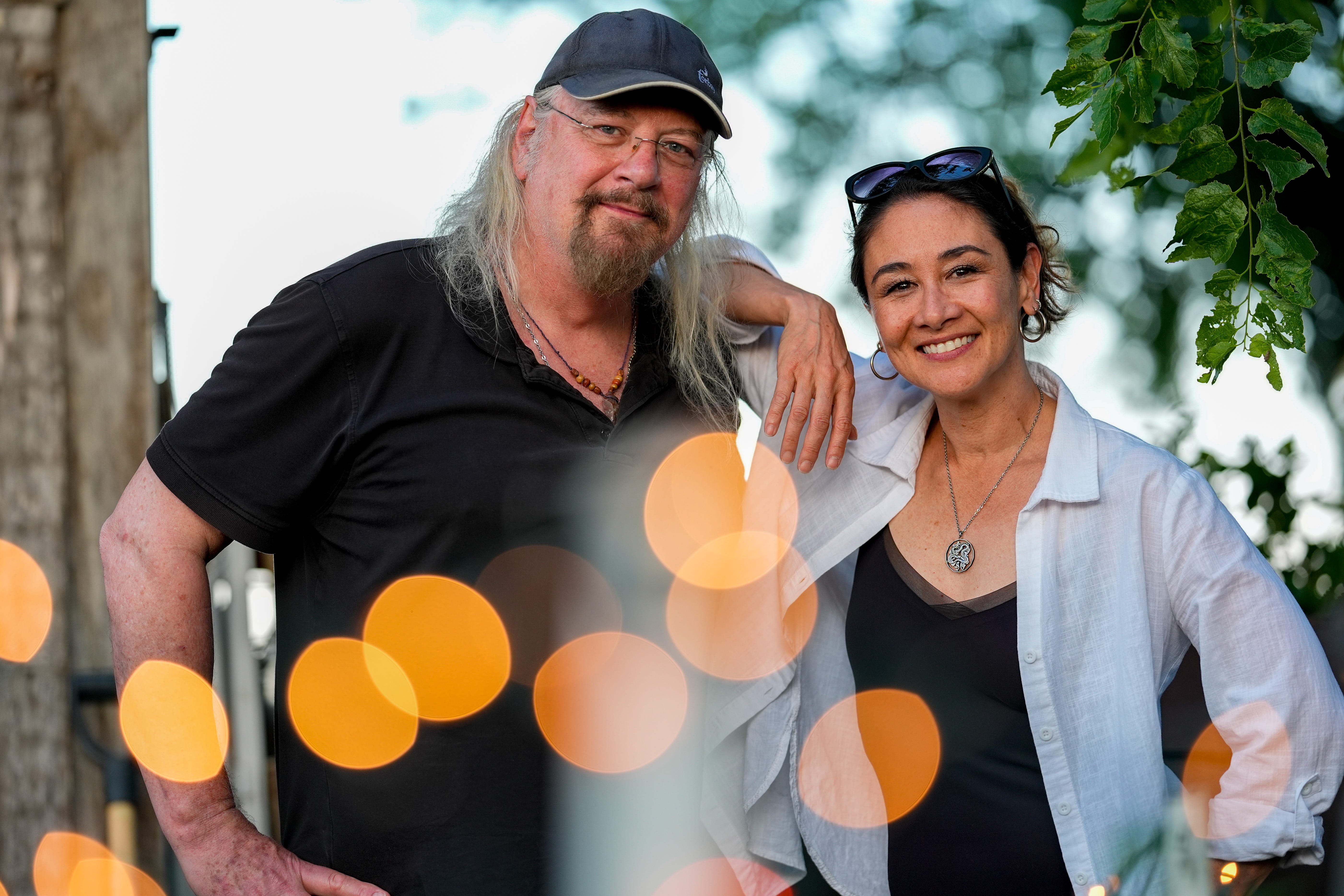
Glenn and I teach (individually and sometimes together) writing workshops at the Larry McMurtry Literary Center in Archer City, Texas. This March, Glenn taught Writing the Non-Fiction Book Proposal. In May, he returned to Texas to join me and Hampton Sides to teach Feature Writing: The Reconstructed Narrative. (Esquire is publishing one of the features a student workshopped with us!)
Next up, Glenn will be speaking at the “Beyond the Breakers” Open Water Summit in Waltham, Massachusetts on November 8 and will appear on the Unstoppable podcast celebrating women athletes on October 22. Oh, and he does take private editing clients. So if you need coaching, find him at glennstout.com.